Tuesday, December 9, 2008

Killer Shark Claims Third Victim


AMITY - The killer shark that has been terrorizing Amity claimed a thid victim this afternoon on Village Beach.


James Parks, 30, was killed by the maneating shark when he was knocked from his rowboat. This comes after Chief of Police Martin Brody announced that the shark suspected of attacking and killing Wendy Watson, 16, and Alex Ferguson, 10, had been killed yesterday.

Shark Hoax Causes Heightened Alarm at Beach


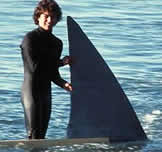
AMITY — Chaos ensued on Village beach today after two children, playing a hoax, swam through the waters with a large shark fin amid the heightened fear of Amity’s beaches.

The atmosphere on the beach had already been tense this morning following the tragic deaths of Alex Ferguson, 10, and Wendy Watson, 16. Shark attacks are the suspected cause of both fatalities.

Chief of Police Martin P. Brody had closed all beaches for 24 hours earlier this week to search the waters for any sharks. Yesterday, a 16-foot nurse shark, suspected of the attacks, was killed one mile south-southwest of Amity.

“I am delighted to report that the giant killer shark that has been blamed for two deaths this week was caught and killed,” said Brody in a press release. “We believe that the danger of further shark attacks has passed.”

Brody assured that while the waters were safe, shark spotters, the Coast Guard and local police were patrolling the ocean to ensure that there would not be another attack.

Meanwhile, sunbathers were initially deterred to go into the water today. Mayor Bob Farley looked distraught and was seen pleading with an Amity citizen to go swimming with his family.

Once the one Amity resident and his family went into the water, other citizens seemed confident to follow suit.

However, the restored confidence was shattered when a large dorsal fin was seen swimming around people in the water. After several people noticed the apparent shark fin, citizens scrambled to escape the seemingly shark infested waters.
Amity has been skeptical of swimming after Watson’s mangled body was washed ashore and Ferguson was attacked on his raft on a busy day at the beach.

Sunday, December 7, 2008

Shark Presence in New England Does Not Represent Dangerous Risk


DURHAM — Amid reports of shark attacks on Martha’s Vineyard, many are asking: could it happen here?

Statistics show that in New Hampshire, there has never been a reported shark attack.

In comparison, Massachusetts and Connecticut – two of the six states in New England – have had a combined total of five attacks. Two of these attacks were fatal in Massachusetts; the last fatality occurring in 1936.

Conversely, according to the International Shark Attack File Web site, there have been eight lightning fatalities since 1959 in New Hampshire.

In an article published in Woods Hole, Mass., shark specialist Gregory Skomal said “the greatest danger is too much attention” when it comes to shark sightings.

New England is home to various species of sharks, including Blueshark, Thresher, Basking and yes, the feared Great White.

According to the New England Sharks Web site, great white sharks “have a wide temperature tolerance range and can withstand cold water temperatures in the 40s.”

However, the risk of a shark attack in New Hampshire is almost nonexistent. There have been no recent sightings in decades of Great White sharks in the granite state; but in 2004, great alarm spread when one was spotted in an estuary in Massachusetts. The shark remained there for two weeks.

Skomal had not sound worried in the article. “It’s a rare opportunity,” he said about seeing the 15-foot shark.

It eventually left the somewhat enclosed area, but people were worried of the danger that the presence caused and worse, future sightings of sharks in the vicinity.

Heightened fear can be contributed directly to the media, said Skomal. Particularly, the film “Jaws” in 1975 has provoked an array of fear about potential shark attacks.

The film, listed the second Most Heart-Pounding American Movie on the American Film Institute’s Top 100 Thrills list has resonated throughout the years.

In fact, the island where “Jaws” was filmed, Martha’s Vineyard, is where the unconfirmed sightings occurred.

Meanwhile, there are some tips offered by experts to reduce the risk of a shark attack. Reducing high contrast color apparel is recommended because sharks have impressive contrast visibility.
Similarly, maintaining a swimmer’s position as quiet as possible is important. Staying calm, though difficult, is crucial because sharks are attracted to erratic movement.

Saturday, December 6, 2008

Is Screening for Mental Illnesses in Adolescents Inefficient?


DURHAM — On Thursday, an expert discussed the increased occurrences of false-positives in the current implemented screening instruments for mental illness in adolescents.

Dr. Allan Horwitz, professor of sociology at Rutgers University, visited UNH to stress the mounting frequency of diagnosed depression in America’s youth and the unreliable tools to diagnosis it.

“Depression has become the signature diagnosis of psychiatry,” said Horwitz. According to the Diagnostic and Statistic Manual of Mental Disorders (DSM) criteria, it is “logically impossible to be minimally sad…by definition, people have some kind of sickness.”

The DSM says to be clinically depressed one must suffer from a lack of interest in daily activities and be in a depressed state for at least two weeks. Additionally, one must experience at least five more symptoms from the DSM list, such as difficulty paying attention and suicidal thoughts.

“Five symptoms to meet the depression criteria is a pretty arbitrary number,” said Horwitz. “It’s unrealistic to assume any one is truly depressed based on the DSM criteria.”

According to the New York Times article, “Depressed? New York Screens for People at Risk,” every one in four adolescents will meet the criteria for depression in the country. Nearly twice as many women suffer than men.

This number was extracted from the current instrument used for screening adolescents: a simple questionnaire.

“Yes or no answers to diagnosis a serious illness, especially one that is inconsiderate towards temporary stressful events, is outrageous,” said Horwitz.

Graduate student Matthew Cutler of the Justice Studies program agreed that “we have identified too many false-positives by blanketing the population of adolescents with this screening initiative.”

The questionnaire in question has quickly become a routine in many primary health care facilities, “much like a blood pressure test or cholesterol reading,” said the Times article.

The screening test gained notoriety in 2003 when Congress, under President Bush, budgeted $20 million for developing screening programs. Patient-advocacy groups of screening say alleviating the psychosocial deficits that accompany depression is crucial to providing sufficient treatments, according to Horwitz.

Attendee Ryan Mitchell, 21, of Horwitz’ lecture sided with the Congress decision and said that he is not convinced screening is so bad.

“I knew some one in high school who committed suicide and I think the tell-all signs were there,” he said. “Maybe if he had taken a screening test, it would have been prevented.”

Meanwhile, Horwitz emphasized that “it is almost unquestionably true that the implementation of required screening among adolescents is too premature [for accurate diagnosis].”

In his lecture, Horwitz said that 84 percent of adolescents that screened positively for depression actually displayed a false-positive at the diagnostic stages.

This large number is contributed to adolescents who experience the tumultuous range of emotions when growing up, or the “the yo-yo of hormonal tendencies”. In most cases, younger individuals that are screened only experience short-term symptoms of depression, while “true depressive cases have endurance,” said Horwitz.

Most of the audience appeared to side with Horwitz and continually nodded their heads in agreement. At one point, one woman said, “That’s right!” when Horwitz said “children are unempowered individuals” that shouldn’t be diagnosed through something as mundane as a survey.

Additionally, Horwitz suggested that pharmaceutical companies are largely to blame for the mass depression. Over the course of 10 years, anti-depressant use has increased 350 percent.

Pharmaceutical companies are “very sneaky” about how they provide funding for screening. They are named as large philanthropic organizations, rather than pharmaceutical companies, that donate money for screening to avoid controversy.

“If it seems like our population is suffering from mass sadness, then we might be dealing with broader social issues that couldn't possibly be solved by administering anti-depression treatment on a grand scale,” said Cutler.

Though Horwitz was unable to identify a specific plan to improve the screening test process for adolescents, he said that ideally a test needs to be developed that does not “take attention away from kids who have real, serious, persistent disorders.”

He did say that developing screening tests sensitive to the context of depression is important to diagnosing adolescents. Horwitz, who was trained in psychiatric epidemiology and in deviance and social control, has written four books and dozens of journal articles pertaining to mental illnesses. His latest book, “The Loss of Sadness,” was published in 2007.

Tuesday, December 2, 2008

Another Body Found: Shark Attack Suspected


SECOND DAY STORY

Amity, Mass. — A young boy died this morning on Village Beach in an apparent shark attack.

Following the death of Wendy W. Watson, 16, Alex Ferguson, 10, of Mayfair Court, was seen turned over in his water raft and dragged under water. A pool of blood flooded the vicinity moments later. A large fin was reportedly seen overturning the raft.
His body has not been recovered.

Ferguson appears to be the second victim in a string of growing shark attacks (though, it should be noted that Watson's official cause of death has not been made public). Amity Chief of Police Martin P. Brody sent out a press release at 11 a.m. and confirmed that “a big bite” was taken out of Ferguson’s raft.

Marian Ferguson, the distraught mother of the latest victim, was on the beach at the time of the attack and subsequently, taken to Amity Hospital for shock. She is reported to be in fair condition.

The atmosphere at the beach this morning was tense following the death of Watson. Few people were seen in the water, while Brody tersely watched on.

He was one of the first to notice the attack and immediately rushed to the shoreline, screaming, “Get out! Get them out!”

Meanwhile, a press conference was held after the attack. Brody announced beaches will be closed for 24 hours. Extra summer deputies, shark spotters and professionals from ocean institutes are expected to be brought in to stake out any sharks in the area.

Public reaction from fishermen and others who make their living off of vacationers expressed intense dissatisfaction with the decision. One woman yelled, “Twenty-four hours is like three weeks!”

Ben Quint, a grizzled old fisherman, offered to track and hunt the apparent man-eater shark responsible for the deaths at a cost of $10,000.

Quint said he would “catch the bird…head, tail – the whole damn thing.” Attendants seem unenthused by Quint’s suggestion, while Mayor Bob Farley said he would take his proposal “under advisement.”

Despite heavy evidence that there is a suspected shark infestation in Amity’s beaches, Brody cautioned “the press not to jump to any conclusions.”

Body of Local Girl Found on Beach


FIRST DAY BREAKING STORY

AMITY, Mass. — The mangled body of a young girl was found on South Beach today after she was reported missing earlier this morning.
Wendy W. Watson, 16, reportedly went missing last night after 11 p.m. after she went skinny dipping. She and a male companion left the close-by beach party alone and were inebriated, according to witnesses.

When Watson, a sophomore at Amity High School, did not return from the water, the unidentified male went to the police at approximately 3 a.m. He had passed out earlier.

Watson’s washed up body was later recovered by an Amity deputy officer.

According to Chief of Police Martin P. Brody, a possible cause of death was a shark attack. Watson’s body lies in the coroner’s office awaiting an autopsy.

Meanwhile, though a shark attack has not been ruled out and an intensive investigation is pending, Brody assured residents there is no danger on local beaches.

Sunday, November 30, 2008

UNH Student Saves Patient's Life


DURHAM — A nursing student acted quickly when she helped saved a man’s life at Exeter Hospital earlier this month.
Katherine Boucher, a junior from Lee, noticed severe bleeding from her post-operative patient during her medical-surgical nursing clinical at the hospital. The patient most likely would have gone into shock from such heavy bleeding had there been no intervention.
According to Beth Evans, a UNH clinical instructor overseeing Boucher, such critical situations are almost unheard of in college students.
“She did exactly what a licensed R.N. would do,” said Evans to the UNH Media News Web site.
Boucher’s quick reaction was surprising and impressive under the circumstances.
“You certainly don’t see this level of critical thinking at a junior level,” said Dr. Sue Fetzer, UNH associate professor of nursing. “What Katherine did was solve the problem first.”
Boucher noticed the bleeding before the patient did and promptly applied pressure to the surgical site without much thought to prevent blood clotting.
“I turned out to be really calm,” said Boucher. “The patient could tell I was in control and that helped him not panic, which is very important.”
Boucher said that student nurses are never really alone when caring for patients, so there was no need to panic. A charge nurse was right around the corner and came to assist with the situation once Boucher alerted her of the patient’s problem.
“I don’t want to get all the credit,” said Boucher. “I had faith in the people I work with and they came through.”
The patient had undergone surgery to reattach an artery through a graft in his leg, which apparently came off a few days after-the-fact.
He is one of two patients Boucher is assigned to. Typically, Boucher’s responsibilities include washing and bathing patients.
More importantly, the purpose of the clinical is to “develop knowledge and skills essential to the present and future practice of nursing,” according to the Nursing Program mission statement.
The first-time experience for Boucher proved to be valuable. “It was a great learning opportunity because this is something that really happens,” she said.
Fetzer added that the rescue not only benefited Boucher’s education and understanding, but provided much-needed credit for nurses.
“Nurses are famously infamous for rescuing patients,” she said. “Frequently, we get bad press for a failure to rescue; this is a good example of how nurses rescue people all the time.”
Meanwhile, Boucher’s sister, Emily, a freshman at the University of Massachusetts in Amherst, believes her sister will continue to prove herself in the medical field.
“She is extremely dedicated to what she does and she always goes that extra mile to make sure her patients have the best care,” she said.
According to the younger Boucher, compassion and empathy have always been in her sister’s nature.
“When we were younger she always looked out for me,” she said. “We were incredibly close – still are.”
Boucher’s family has been supportive and excited for their daughter’s accomplishments at school.
“We all knew she would be a great nurse,” said her sister. “My mom tells everyone about what Katherine has done.”
Both Fetzer and the nurse’s sister are in agreement that Boucher’s natural instinct to help people and her drive to learn directed her efforts to save the patient.
“She’s quiet, but she sits in the front row and always asks great questions that make her a better nurse,” said Fetzer.
Boucher hopes her education and training will pay off when the time comes for her clinical practicum – a clinical practice site based on the interests and strengths of the nurses. The formal clinical takes place during a nursing student’s senior year.
The practicum, which helps most nursing students get hired full-time after college, would enable Boucher to “work under a doctor or get a doctorate,” she said.
About 80 students a year enter into the nursing program, which later prepares students for their licensing exams.
Approximately 97 percent of UNH students passed their exams last year compared to the 85 percent nationwide.
“The exam helps students to appreciate how tough nursing is,” said Fetzer, “and I think Katherine got a taste of that.”
Boucher hopes to some day become a mid-wife and care for pregnant women before, during and in some cases, after birth.
“The nursing program is a good foundation for that,” said Boucher, the daughter of Phil and Penny Boucher. “I really want to continue helping people.”